

The Vision Behind the Platform
Our mission is simple: To preserve and propagate genuine Vedic wisdom through ethical, user-centered technology. In an age of quick fixes and superficial spirituality, we offer a return to depth, authenticity, and meaningful practice. Each tool is a labor of reverence—crafted with technical expertise, validated by tradition, and offered with a spirit of service.
We invite you to explore, engage, and empower your spiritual journey with resources you can trust. Whether you are taking your first steps into Vedic astrology or are a seasoned practitioner, this platform is designed to grow with you, offering reliable guidance at every stage of your path.
Discover the Ultimate Collection of Free Hindu Astrology & Spirituality Tools
In today’s fast-paced world, more and more people in India and across the globe are turning back to ancient Vedic wisdom for guidance, peace, and clarity in life. With over 50+ carefully crafted online tools now available on our platform, we’ve made it easier than ever to access authentic Hindu astrology, rituals, and spiritual practices — all for free.
Whether you’re planning a marriage, checking daily muhurat, balancing your chakras, or tracing your ancestral gotra, our comprehensive suite of tools brings centuries-old traditions right to your fingertips.
This in-depth guide explores our complete collection of 50+ tools, explaining their significance, how they work, and real-life benefits based on Vedic principles and modern experiences. We’ll cover everything from daily Panchang to advanced dosha calculators, mantra trackers, and ceremony planners — all designed to support your spiritual journey with authenticity and ease.
All 50+ tools are completely free, require no registration, and are designed with both accuracy and ease of use in mind.
| # | Icon | Tool Name | Description |
|---|---|---|---|
| 1 | 🧘♂️ | Chakra Timer | Meditate and balance your seven chakras with timed guidance and audio prompts. |
| 2 | 🕰️ | Choghadiya Calculator | Check daily auspicious (Amrit, Shubh, Labh) and inauspicious timings for starting new tasks. |
| 3 | 🕉️ | Gotra Calculator | Find your Gotra based on surname, community, and lineage details. |
| 4 | 📜 | Gotra Certificate | Generate and download an official-looking Gotra certificate for records. |
| 5 | 🌳 | Family Tree Maker | Create a visual family tree of your ancestors and genealogy. |
| 6 | 🔍 | Gotra Finder | Search extensive database to find Gotra by surname and region. |
| 7 | 🕍 | Kuldevi Finder | Discover the family deity (Kuldevi/Kuldevta) associated with your Gotra. |
| 8 | 🗺️ | Gotra Origin | Trace the historical and scriptural origin of your Gotra and sage lineage. |
| 9 | 🔮 | Gotra in Horoscope | Understand the role and importance of Gotra in Kundli matching. |
| 10 | 🪐 | Grah Gochar Check | Check current planetary transits and their effects on your life. |
| 11 | 💌 | Invite Card Maker | Design beautiful custom invitations for housewarming and other ceremonies. |
| 12 | 🏠 | Griha Pravesh Muhurat | Find the best auspicious dates and timings to enter your new home. |
| 13 | 🕉️ | Hanuman Chalisa | Read, listen, and get verse-by-verse translation of Hanuman Chalisa. |
| 14 | 📜 | Vanshavali Finder | Trace your Hindu lineage, genealogy, and ancestral history. |
| 15 | 🥥 | Puja Samagri List | Generate customized checklist of items required for various pujas. |
| 16 | 🏯 | Kuldevi Temple | Locate the main temple and details of your family Kuldevi/Kuldevta. |
| 17 | 🔥 | Mangal Dosha | Check for Manglik (Mangal) Dosha in your horoscope and remedies. |
| 18 | ⭐ | Nakshatra Calculator | Find your birth star (Janma Nakshatra) instantly from date and time. |
| 19 | 🌌 | Navagraha Shanti | Get remedies to pacify all nine planets (Navagraha). |
| 20 | 🔢 | Lucky Number | Calculate your lucky number using Vedic numerology and date of birth. |
| 21 | 📅 | Daily Panchang | Today’s Tithi, Nakshatra, Yoga, Karana, Rahukaal, and auspicious timings. |
| 22 | 🕯️ | Pind Daan Calculator | Find suitable dates and rituals for Pind Daan ceremony. |
| 23 | 📉 | Pitra Dosha | Check if your Kundli has Pitra Dosha and suggested remedies. |
| 24 | ♎ | Rashi Calculator | Find your Moon Sign (Rashi) accurately from birth details. |
| 25 | 📿 | Rudraksha Check | Discover which mukhi Rudraksha is most suitable for you. |
| 26 | 🔯 | Janm Kundli Calculator | Generate free Vedic birth chart with basic analysis and doshas. |
| 27 | 🪐 | Sade Sati Calculator | Check current, upcoming, or past Sade Sati phase and its effects. |
| 28 | 🐍 | Kaal Sarp Dosh | Analyze presence and type of Kaal Sarp Dosha (12 types) with remedies. |
| 29 | 🔱 | Online Mantra Counter | Digital Japa Mala – tap to count mantras with bell sound at 108 repetitions. |
| 30 | ☀️ | Gayatri Mantra Count Tracker | Track daily Gayatri mantra sadhana with 108-chant counter and progress. |
| 31 | 🖩 | Varshphal Calculator | Vedic solar return chart and yearly predictions (Varshphal). |
| 32 | 🪔 | Sampoorna Vrat Katha | Read ancient Hindu fasting stories and kathas in Hindi with meaning. |
| 33 | ☀️ | Sun Transit Checker | Surya Gochar effects and Vedic remedies for current Sun transit. |
| 34 | 🌎 | Vimshottari Dasha Calculator | Complete 120-year planetary period timeline with predictions. |
| 35 | 🪐 | Saturn Transit Calculator | Detailed Sade Sati, Dhaiya analysis and predictions for 2025–2026. |
| 36 | 💌 | Love Calculator | Check love compatibility by name, zodiac, and date of birth. |
| 37 | 💎 | Gemstone Calculator | Find your lucky gemstone (ratna) based on name and birth details. |
| 38 | 🪄 | Advanced Mantra Suggester | Personalized mantra recommendations based on Nakshatra, numerology & goals. |
| 39 | ♨️ | Havan Samagri List Generator | Authentic Vedic havan items checklist – customize and print. |
| 40 | ᬒᬁ | Ganpati Atharvashirsha | Full Sanskrit text, meaning, audio, and recitation guide. |
| 41 | 🪴 | Tulsi Care Calendar Calculator | Auspicious dates for planting, watering, and caring for Tulsi plant. |
| 42 | 🙏 | Stotra PDF Generator | Select, edit, and download sacred Hindu stotras and texts in PDF. |
| 43 | 🚩 | Ekadashi Vrat Rules Calculator | Complete guide: fasting rules, allowed foods, timings, and benefits. |
| 44 | ⏳ | Ekadashi Parana Time Calculator | Exact Parana (fast-breaking) time for any Ekadashi worldwide. |
| 45 | 🔅 | Vikram Samvat Pro Calculator | Professional Vedic calendar conversion between Gregorian and Vikram Samvat. |
| 46 | ♈ | Naam Se Rashi Nikalne Ka Calculator | Find Moon sign (Rashi) from the first letter of your name. |
| 47 | 🔴 | Daily Auspicious Color Finder | Today’s lucky color according to planetary positions and Hindu astrology. |
| 48 | 🌝 | Moon Phase Percentage Calculator | Exact percentage of moon visibility today with phase details. |
| 49 | 💌 | Mundan Ceremony Card Generator | Create beautiful invitation cards for baby’s first haircut (Mundan). |
| 50 | 🕯️ | Pitru Paksha Shradh Calculator | Complete ritual schedule and dates for ancestor worship during Pitru Paksha. |
| 51 | ❤️ | Nadi Dosha Calculator | Check Nadi Dosha in horoscope matching and its effects on marriage. |
Why We Created This Platform – Bringing Ancient Vedic Wisdom to Modern Life
I still remember the day it all started. A close friend called me in distress – his family was planning a marriage alliance, but the local pandit had quoted a hefty fee just for basic gotra verification and kundli matching.
In another conversation, a young professional shared how confusing online apps were: pop-up ads everywhere, inaccurate panchang timings, and predictions that felt generic and disconnected from real Vedic principles.
That’s when it hit me. In today’s world, millions of us want to stay connected to our roots – whether it’s checking an auspicious muhurat for griha pravesh, understanding Sade Sati’s influence, or simply tracing our gotra and kuldevi – but genuine, trustworthy guidance is either expensive or buried under misleading information.
As someone who has studied Vedic astrology for over two decades, guided by traditional texts like Brihat Parashara Hora Shastra and personal mentorship from experienced pandits, I felt a deep responsibility to change this. Ancient rishis shared this knowledge freely for the benefit of humanity. Why should it be locked behind paywalls or diluted by commercial apps in 2025?
That’s the vision behind this platform: to make authentic Hindu spirituality and Vedic astrology accessible to everyone, completely free, with no ads, no hidden charges, and no compromise on accuracy.
We’re living in a transformative time. In 2025, major planetary shifts are unfolding – Saturn continues its long stay in Pisces, teaching lessons of discipline and spiritual depth, while Jupiter moves through Gemini, expanding communication, learning, and new ideas.
Rahu and Ketu are shifting signs, bringing karmic closures and fresh beginnings. These transits affect all of us collectively, influencing everything from personal growth to global events. Many people are turning inward, seeking clarity through daily panchang, mantra sadhana, chakra balancing, or dosha remedies – and the interest in Sanatan Dharma and Vedic practices has grown remarkably in recent years.
Yet, reliable resources remain scattered or unreliable. That’s why we built more than 50 carefully crafted tools, each grounded in classical Vedic principles:
- Precision you can trust: We use the widely accepted Lahiri Ayanamsa (the standard followed by most traditional pandits and government-approved panchangs in India) along with accurate ephemeris data for planetary positions. Whether it’s calculating today’s Choghadiya, Ekadashi parana time, or Vimshottari dasha periods, the results match what experienced astrologers would compute manually.
- No commercial interference: Unlike many apps that push paid consultations or gemstone sales, everything here is offered as pure seva – a service to preserve and share our heritage.
- Practical for everyday life: From generating a puja samagri checklist to designing a mundan ceremony invitation, from tracking Gayatri mantra counts to finding your kuldevi temple – these tools are designed for real people living real lives, balancing modern demands with spiritual traditions.
Importance of Vedic Astrology in Daily Life
I still remember my grandmother waking up before sunrise, lighting a small diya, and quietly checking the Panchang calendar on the wall. “Today is a good day for new work,” she’d smile, or “Let’s wait till after Rahu Kaal.”
As a child, I thought it was just tradition. Now, after years of studying Jyotish and using it in my own life, I know it’s so much more—it’s a gentle guide that makes every day feel calmer and clearer.
In today’s busy world, Vedic astrology helps us in the simplest, most practical ways. Every morning, I glance at the daily Panchang to see the tithi and nakshatra. If I have an important call or meeting, I try to schedule it during Abhijit Muhurat or Shubh Choghadiya.
It takes only a minute, but somehow things go smoother—no last-minute delays, no unnecessary arguments. It’s like choosing to walk with the wind instead of against it.
For health and peace of mind, Jyotish has been a true friend. Whenever I feel anxious or low, I check my running dasha. If the Moon is weak, I spend a few minutes chanting “Om Chandraya Namah” or offer water to the Moon on Mondays. If Saturn feels heavy, I light a sesame-oil lamp on Saturdays and donate black sesame seeds.
These small acts don’t cost money, yet they bring real calm. My mother used the same remedies for sleepless nights, and they always helped her feel lighter.
When it comes to family and marriage, nothing gives more peace than Kundli matching. Last year, my cousin was worried about Mangal Dosha. We checked properly, did the simple remedies—visiting Hanuman temple every Tuesday—and today they are happily married.
It’s not about fear; it’s about starting a new journey with respect and understanding. Even gotra checking before marriage feels like honoring our ancestors—it keeps our roots strong.
Career decisions feel less scary too. Before I changed jobs two years ago, I looked at my Jupiter transit. It was entering my 10th house, a beautiful time for growth. I took the step, and everything fell into place. Friends now ask me to check muhurat before interviews or starting a business, and they always come back saying, “It really worked!”
Most of all, Vedic astrology brings me closer to God. Chanting Gayatri mantra at sunrise, fasting on Ekadashi, or simply remembering my kuldevi—these little habits fill my heart with gratitude. Life still has ups and downs, but I no longer feel alone. I feel guided, protected, and deeply connected to something bigger.
That’s why I made all these tools free. I want everyone—whether you’re a student, parent, or grandparent—to experience the same comfort my grandmother gave our family. No fees, no ads, just honest help from our ancient wisdom.
Try it for a week. Check today’s Panchang, wear the day’s lucky color, chant one small mantra. You’ll feel the difference, the same quiet strength that has guided generations. And I promise, it will make your everyday life a little brighter, a little kinder, and a lot more peaceful.
Understanding Gotra in Hindu Traditions & their Marriage Compatibility Explained
Gotra Calculator is one of the most searched topics among Indian families today. Many people look for gotra compatibility or gotra finder online free to understand whether two individuals can marry according to Hindu traditions. In this detailed guide, you’ll learn what gotra means, how to check your gotra online, and why gotra matching remains important in modern marriage.

What is Gotra? — Hindu Gotra System Explained
In Hindu dharma, Gotra refers to a family lineage or ancestral clan derived from ancient sages known as Rishis. Every Hindu family belongs to one or more gotras, such as Kashyap Gotra, Bhardwaj Gotra, Shandilya Gotra, or Upmanyu Gotra. The word gotra literally means “cow shed” in Sanskrit, symbolizing the protection and continuation of a bloodline.
Why Gotra is Important for Marriage 💍
You might wonder — is gotra important for marriage? The answer lies in tradition and genetics. According to ancient customs, two people from the same gotra are considered descendants of the same sage and are thus treated as brother and sister. Marrying within the same gotra was traditionally prohibited to avoid genetic similarities and maintain purity of lineage.
Gotra Compatibility for Marriage
Gotra compatibility plays a vital role during matchmaking, especially in Brahmin, Kayastha, and Vaishya communities. Families often check the gotra matching table to ensure both partners belong to different ancestral lines. This practice continues even today, blending traditional beliefs with modern understanding.
Common Gotra Matching Rules
- Marriage within the same gotra is traditionally avoided
- Maternal and paternal gotras are both considered in some regions
- Some communities follow sapinda (ancestral) limits up to seven generations
- Modern families sometimes allow same-gotra marriages with ritual exceptions
Regional Variations
In North India, Brahmin families strictly follow gotra-based restrictions. In South India, systems like Nadi Dosha and Kula are used along with gotra. Urban areas often balance both—respecting traditions but prioritizing compatibility and education.
How to Check Gotra for Marriage 🧭
Checking your gotra can be done in two main ways — manually through family elders or online using a gotra finder or online gotra calculator.
Manual Method to Find Gotra
- Ask your father, grandfather, or family priest (Pandit ji)
- Check traditional family registers or kul-pustak
- Visit temples or community archives that maintain genealogy records
Online Gotra Finder / Gotra Checker
Many websites provide gotra finder online free tools. These tools ask for your surname, community, and region to suggest your likely gotra. For example, entering “Dubey” may show Sandilya Gotra, while “Trivedi” may correspond to Katyayan Gotra. Always cross-verify these results with family elders for accuracy.
Step-by-Step Guide to Use Gotra Calculator
- Enter your surname and your father’s or grandfather’s name
- Select your caste or community (e.g., Brahmin, Kayastha, Vaishya)
- The tool will display a list of probable gotras
- Cross-verify the result with elders or priests before confirming for marriage
Gotra Matching Table (Example)
Note: This table provides general guidelines. Always consult with family elders and priests for accurate gotra verification.
| Gotra (Male) | Common Surnames | Avoid Marrying With | Notes |
|---|---|---|---|
| Kashyap Gotra | Kashyap, Sharma, Verma | Kashyap (same) | Associated with Sage Kashyapa, linked to Rig Veda |
| Shandilya Gotra | Mishra, Dubey | Shandilya (same) | Also known as Sandila Gotra; very common in North India |
| Bhardwaj Gotra | Pandey, Tiwari | Bhardwaj (same) | Linked to Sage Bharadwaja; considered scholarly lineage |
| Upmanyu Gotra | Upadhyay, Joshi | Upmanyu (same) | Priestly and scholarly families across U.P. and Gujarat |
| Katyayan Gotra | Trivedi, Tripathi | Katyayan (same) | Linked with Sage Katyayana; found in Central India |
Common Gotra – Surname List 📜
One of the most searched queries on the internet is “Kashyap gotra belongs to which Veda?” or “Which surnames come under Bhardwaj Gotra?” Below is a carefully curated list showing common gotras, associated surnames, and the region where they are prevalent.
| Gotra | Common Surnames | Region / States | Remarks |
|---|---|---|---|
| Kashyap Gotra | Kashyap, Sharma, Verma, Yadav (some) | North & Central India | Linked to Sage Kashyapa; associated with Rig Veda |
| Bhardwaj Gotra | Pandey, Tiwari, Dwivedi, Sharma | U.P., Bihar, Rajasthan | Famous rishi lineage known for Vedic education |
| Shandilya Gotra | Mishra, Dubey, Pathak | Eastern U.P., Bihar | Known for spiritual and teaching heritage |
| Katyayan Gotra | Trivedi, Tripathi | M.P., Gujarat | Named after Sage Katyayana; Yajur Veda tradition |
| Upmanyu Gotra | Upadhyay, Joshi | Gujarat, Maharashtra | Relates to devotional teachers and scholars |
Advanced Gotra Compatibility Logic 🧮
When building or using a Gotra Matching Calculator, it’s wise to apply deeper logic beyond simple same-gotra avoidance. The following layers can enhance accuracy:
- Primary Rule: Same gotra → not compatible
- Secondary Rule: Check maternal gotra to avoid overlap from mother’s side
- Tertiary Rule: Verify Pravara (sub-lineage) if data is available
- Optional Logic: Match by region or community for cultural relevance
- Output Tip: Show clear “Compatible / Not Compatible / Check Manually” labels
Example Output Format for Your Tool
Groom Gotra: Kashyap
Bride Gotra: Bhardwaj
Compatibility: ✅ Compatible
Remark: Both belong to different sage lineages.
Understanding the Pravara System 🔭
Every Gotra is further classified into a smaller lineage known as Pravara. In Sanskrit, “Pravara” means “invocation” — it represents the names of sages remembered during sacred rituals. Each gotra can have one or more Pravaras, which signify the specific line of descent within the main rishi clan.
Example of Pravara Structure
Gotra: Bhardwaj
Pravara: Angirasa, Barhaspatya, Bhardwaja
Meaning: Descendant of Sage Bharadwaja belonging to the Angirasa lineage.
Why Pravara Matters in Compatibility
- Modern Gotra Compatibility Calculators can include pravara data for higher accuracy
- If two individuals share same gotra and same pravara, they are considered too closely related
- If gotra differs but pravara overlaps (rare cases), priests advise caution
Scientific View on Gotra System 🔬
The Gotra system is an ancient Indian genetic safeguard designed to prevent inbreeding. While modern genetics uses DNA testing, Vedic scholars used gotra to track paternal lineage and ensure genetic diversity.
Scientific Parallels
- Patrilineal Lineage: Gotra traces Y-chromosome inheritance, similar to modern paternal DNA tracking
- Inbreeding Prevention: Same-gotra marriage rules mirror genetic diversity protocols used in modern biology
- Regional Variation: Mutation and migration created sub-gotras over thousands of years, similar to genetic drift
Modern Genetics + Gotra: Studies by anthropologists show that endogamy (marriage within a close lineage) can lead to recessive gene expression. The ancient Gotra prohibition cleverly avoided this, ensuring healthier offspring without needing genetic tests.
Practical Tips When Using Gotra Finder Tools ⚙️
- Use gotra checker tools only from trusted cultural or temple organizations
- Always confirm results with family elders or community priests
- Document the gotra result for both sides before finalizing marriage
- Remember: surname ≠ gotra. The same surname can belong to different gotras
Important: If the family is unsure of its gotra, it’s common to perform a small ritual called Gotra Nirdharan with the help of a priest. This ensures that marriage ceremonies are conducted properly without violating ancestral customs.
Gotra Myths vs Facts
Myth 1: Same Gotra Marriage is Illegal
Fact: In India, there’s no national law that bans same-gotra marriage. The restriction is cultural, not legal. Many inter-gotra marriages are accepted when families agree.
Myth 2: Surname Defines Gotra
Fact: A surname can appear in multiple gotras. For example, “Sharma” might belong to Kashyap, Bhardwaj, or Shandilya Gotra depending on ancestral lineage.
Myth 3: Gotra Has No Modern Relevance
Fact: Even today, many families use gotra as a symbol of identity, faith, and tradition. It reminds us of our ancient heritage and connects us to the Vedic sages.
Spirituality & Its Role in Inner Growth
I grew up watching my father sit quietly every evening, eyes closed, chanting a few verses from the Gita. He never preached; he just lived it. As a child, I thought it was boring. Today, I understand why he did it – spirituality wasn’t something he did; it was who he became through those quiet moments.

In today’s world, where stress, comparison, and endless notifications keep us restless, spirituality offers something no app or therapy can fully replace: a deep, lasting sense of inner peace.
It’s not about wearing saffron robes or renouncing everything. For most of us, it’s simple daily habits that slowly change the way we see ourselves and the world. When I started chanting the Gayatri mantra every morning, I didn’t feel anything dramatic at first. But over months, I noticed my reactions softened. Anger came less often. Patience grew naturally. That’s the real magic of spirituality – it works quietly, from the inside out.
In Vedic tradition, inner growth happens when we connect with our true self – the atman – beyond the mind’s noise. Practices like meditation, mantra japa, or chakra balancing help clear the layers of ego, fear, and old patterns. I’ve seen it in my own life and in many others. A young friend of mine was always tense about work and relationships. She started tracking her Gayatri mantra counts daily (using our simple counter tool). After a few weeks, she told me, “I feel lighter, like I’m carrying less inside me.” That’s not magic; it’s consistent practice doing its gentle work.
Spirituality also teaches surrender. When things go wrong – a failed plan, a health scare, or a broken relationship – the mind wants to fight or blame. But when we sit with a mantra or pray to our kuldevi, something shifts. We stop struggling so hard. We accept what we can’t change and find strength to act on what we can. I’ve learned that surrender isn’t giving up; it’s trusting there’s a bigger picture we can’t always see.
For many, this journey begins with small steps: lighting a diya in front of the family deity, offering water to Tulsi every morning, or fasting on Ekadashi with devotion rather than just hunger. These acts build discipline, gratitude, and connection. Over time, they transform us. We become kinder, calmer, and more present.
What I love most is that spirituality doesn’t ask for perfection. It only asks for sincerity. You don’t need to be a saint to grow. You just need to show up – even on days when you feel distracted or tired. The growth happens in those small, honest moments.
This is why I created tools like the mantra counter, chakra timer, and stotra PDFs. They make it easy for anyone to start, no matter how busy life is. A five-minute japa session or a short meditation can become the anchor that keeps you steady through the day.
Inner growth isn’t about becoming someone new; it’s about remembering who you already are – peaceful, whole, and connected to something divine. Spirituality simply helps us return to that truth, one quiet step at a time.
If you’re feeling restless or searching for meaning, try one small practice today. Light a diya, chant a mantra, or just sit in silence for a few minutes. You’ll feel the shift – slowly, gently, and beautifully.
How Our Tools Help You Make Better Life Decisions
I often get messages from people saying, “I wish I had known this earlier.” A young man wrote to me after using our Sade Sati calculator—he realised why the last few years felt so heavy, and instead of feeling stuck, he started simple Shani remedies and felt hope again.
A mother told me she used the Griha Pravesh muhurat tool before moving into their new home, and the whole family felt the house “settled” peacefully from day one. These small stories remind me why we built these tools—to help you make choices that feel right, not just logical.

Life is full of decisions, big and small. Should I change jobs? Is this the right time to start a family? When should we plan the mundan ceremony? Which direction should we face while praying? Our tools don’t decide for you—they give you clear, traditional guidance so you can choose with confidence and peace.
When you check the Daily Panchang or Choghadiya, you’re not just seeing dates—you’re picking moments when energy supports you. I remember planning a small shop opening for a friend. We chose a Labh Choghadiya on a Thursday. Nothing dramatic happened that day, but the business grew steadily without major hurdles. He still laughs and says, “That muhurat really worked!”
For bigger decisions like marriage, our Kundli matching, Mangal Dosha, and Gotra tools help families discuss openly instead of worrying in silence. One couple discovered mild Nadi Dosha, did the recommended remedies together, and today they say it brought them closer even before the wedding.
Career and money choices become less scary too. Before accepting a new role, check your running Vimshottari dasha or current Jupiter transit. If it’s favourable, take the step with courage. If it’s a testing period, prepare better or wait a little—sometimes patience is the wisest decision.
Health decisions also get easier. Feeling low energy? Check if Saturn or Rahu is influencing your chart. Our Navagraha remedies and Rudraksha suggestions guide you toward simple practices—maybe wearing a 5-mukhi Rudraksha or offering water to the Sun. These aren’t quick fixes, but gentle supports that make a real difference over time.
Even daily habits improve. Use the Mantra Counter to build a steady japa practice. Start with just 108 Gayatri mantras every morning. After a month, you’ll notice sharper focus and calmer reactions. The Chakra Timer helps you sit for ten quiet minutes, balancing energy centres when life feels scattered.
For family traditions, our Puja Samagri lists, Ekadashi rules, and Pitru Paksha calculator take away the guesswork. You perform rituals with full heart, knowing every item and timing is correct. That devotion reaches your ancestors and brings unseen blessings.
I made these tools because I’ve seen how the right information at the right time changes everything. It turns worry into preparation, confusion into clarity, and fear into faith. You still make the final decision—but now you make it with ancient wisdom by your side, not alone.
Try one tool today for your next choice, big or small. Check a muhurat. Look at your dasha. Count a round of mantras. You’ll feel the difference—not as magic, but as quiet strength guiding you forward.
Life is too precious to leave completely to chance. Let these tools be your gentle companions, helping you choose paths that lead to peace, growth, and joy.
Who Can Benefit From This Platform
When I started building this platform, I didn’t think about “target users” or fancy demographics. I thought about real people I know—friends, family, neighbors—who quietly need a little extra guidance in life. And honestly, that’s who this is for: anyone who feels drawn to our ancient traditions and wants to live them in a simple, honest way.
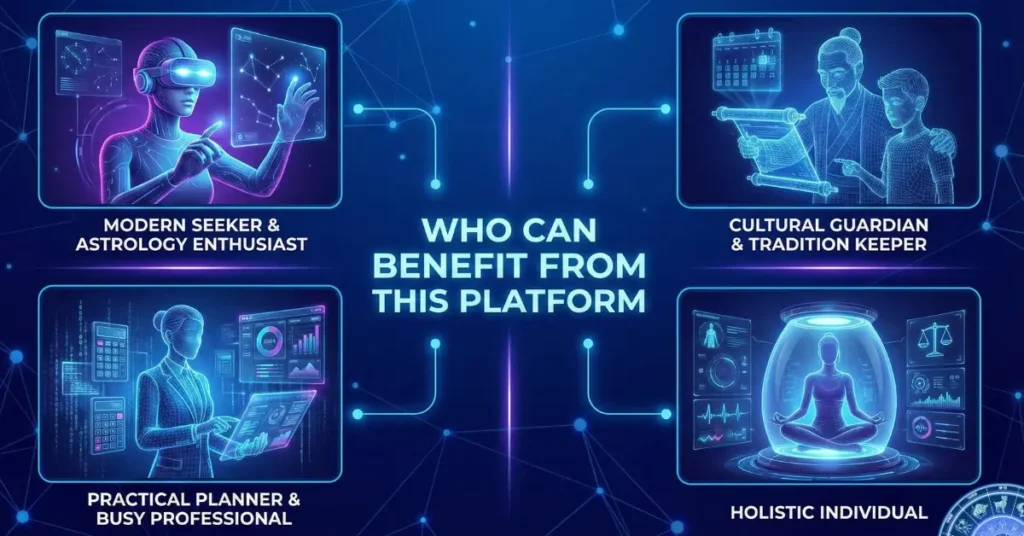
First and foremost, it’s for busy young professionals. You’re juggling jobs, commutes, and family, and you want to stay connected to your roots without spending hours searching unreliable apps. Check the daily Panchang before a big meeting, find a good muhurat for your new apartment, or quickly see if today’s color matches your rashi—it takes just a minute and brings a sense of calm to your fast-paced day.
Newlyweds and families planning marriage find it invaluable. Whether you’re checking gotra compatibility, kundli matching, or remedies for doshas, you can do it together at home, without pressure or high costs. I’ve seen couples use our tools to discuss things openly, turning what could be stressful into a shared, meaningful experience.
Parents and grandparents love it too. Raising kids, planning mundan or griha pravesh, or remembering Ekadashi dates—it’s easy to forget details. Our checklists and calculators take the worry out. One grandmother told me she uses the Pitru Paksha tool every year to honor her ancestors properly, and it makes her feel connected across generations.
Spiritual seekers and those exploring meditation benefit deeply. If you’re new to mantra japa, the counter tool helps you build a habit without losing count. Chakra balancing or Gayatri mantra tracking becomes a daily ritual that brings real inner peace. Many beginners start here and grow into a steady sadhana.
Even people facing challenges—health issues, career blocks, or emotional ups and downs—find comfort. Our dosha checks and remedies (like Sade Sati or Mangal Dosha) aren’t meant to scare you. They help you understand what’s happening and take small, positive steps forward. A friend going through a tough Saturn phase used our remedies and said, “It didn’t change everything overnight, but it gave me hope and direction.”
Students and young adults exploring their identity love the gotra finder, kuldevi locator, and rashi tools. It’s a fun, meaningful way to learn about your heritage without needing a pandit every time.
And honestly, this platform is for anyone who believes in something bigger—whether you’re deeply religious or just curious. You don’t need to be an expert. You don’t need to spend money. All you need is an open heart and a desire to live with a little more awareness and grace.
I made this for my family, my friends, and people like you—ordinary folks who want to blend tradition with modern life. If you’ve ever felt curious about your horoscope, wanted to plan a puja right, or just needed a quiet moment of guidance, this is for you.
Come explore. Start with one tool today. You might be surprised how much it helps.
Accuracy & Authenticity of Our Astrology Content
I’ve lost count of how many times people have told me, “I tried an online Kundli once, but the dates didn’t match what our family pandit said.” Or “The Panchang on that app showed Rahu Kaal ending at a different time.” Those stories hurt because they shake trust in something as sacred as Jyotish. That’s exactly why accuracy and authenticity matter more to me than anything else on this platform.
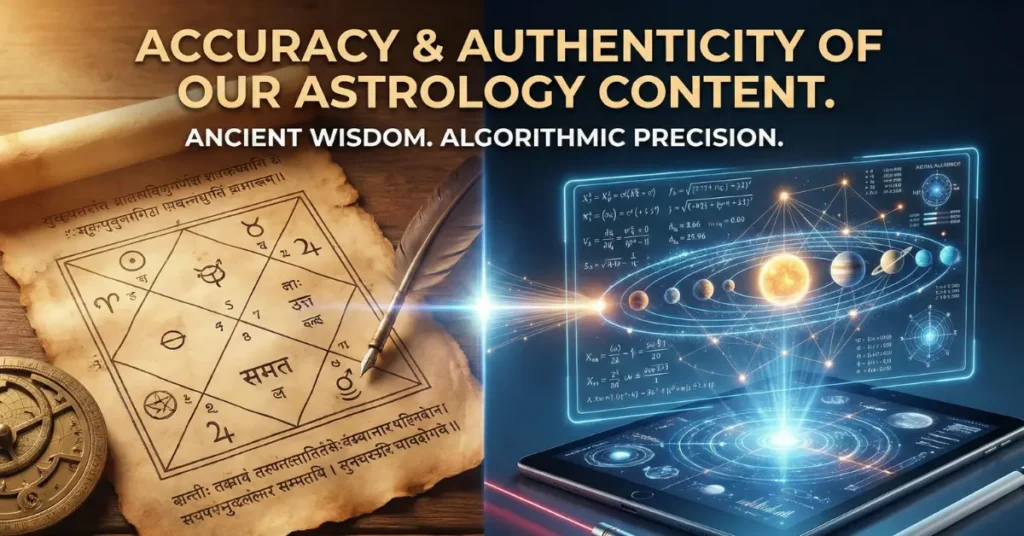
Every single tool here is built on principles I’ve followed and verified for years. We use the Lahiri Ayanamsa—the same one accepted by most traditional pandits, the Government of India for official calendars, and major temples. Planetary positions are calculated with precision that matches classical ephemeris standards. When you check today’s Panchang, Choghadiya, or Ekadashi parana time, it aligns with what experienced astrologers would tell you in person.
I don’t take shortcuts. No approximate formulas, no “close enough” timings. For example, the Vimshottari dasha calculations follow the exact 365.25-day solar year method described in Parashara. The Ashtakoot matching counts every koot properly, including the full weightage for Nadi. Even small details—like correctly adjusting for your city’s longitude and latitude for sunrise, Rahu Kaal, or Yamaganda—are handled carefully.
Authenticity goes beyond numbers. I grew up listening to pandits recite rules from ancient texts, and I’ve studied those texts myself. Remedies suggested here—whether for Mangal Dosha, Sade Sati, or Pitra Dosha—come straight from trusted sources like Parashara, Jaimini, and common temple practices. We never recommend expensive gems or elaborate yagnas unless truly needed. Simple, sincere acts like mantra japa, charity, or temple visits are always preferred, because that’s how our elders taught us.
Gotra and kuldevi information is drawn from traditional lists followed across regions, cross-checked with community records. We clearly say: always confirm with family elders, because personal lineage matters most.
I’ve personally tested every tool against real-life charts. When Saturn entered Pisces in 2023 and again shifted in 2025, our Sade Sati and transit calculators matched the exact dates announced by respected astrologers. Families used our Griha Pravesh muhurat and later shared that everything felt peaceful from the first day. These quiet confirmations mean the world to me.
We don’t chase trends or add “modern” twists that dilute the tradition. No mixing incompatible systems, no unverified claims. What you get is pure, classical Vedic guidance—offered freely, without ads or upsells.
At the end of the day, astrology is about trust. You trust the stars, you trust the rishis who observed them, and I want you to trust this platform completely. That’s why I lose sleep over even tiny inaccuracies and keep updating everything as soon as new ephemeris data or calendar rules come in.
This isn’t just a website. It’s my quiet promise to keep our sacred knowledge alive—accurate, honest, and accessible to every seeker.
Use these tools with full faith. They are built with the same reverence my grandmother showed when she opened her old Panchang every morning.
How to Use Our Free Astrology & Spiritual Tools
Let me be honest—when I first made these tools, my cousin tried one and called me laughing: “Bhai, it’s too many buttons!” I told her, “Just pick one thing you need today, and ignore the rest.” That’s still my best advice. Don’t try to use everything at once. Start small, and it will feel natural in no time.
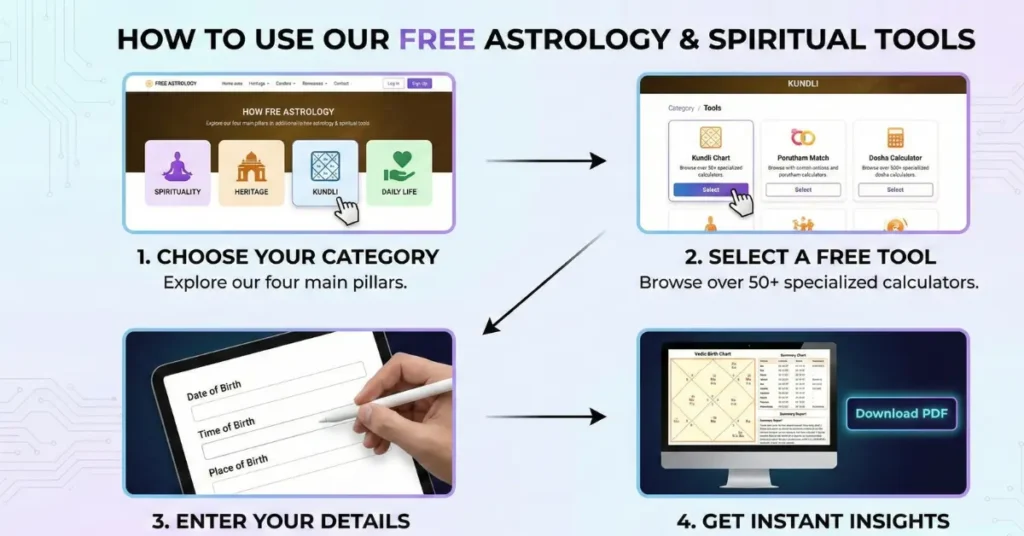
Here’s how I tell friends and family to get going—simple steps, the way I do it myself:
Step 1: Open the website and look around Come to the main page (save it in your bookmarks—it’s your personal pandit now). Scroll slowly. See something you need today? Like “gotra calculator” if you want to know about gotra, or “Gotra Finder” if someone asked about marriage talks. Just click the name. The tool opens instantly—no login, no payment, nothing.
Step 2: Put in your details Most tools ask for very basic things: your birth date, time, and city (for horoscope ones) or surname and community (for gotra). If you don’t know exact birth time, put the closest you remember and go ahead—it’ll still give useful guidance. I always tell people: better approximate than nothing.
Step 3: Read what comes out The result shows up clearly. For example, if you check Mangal Dosha, it’ll say yes or no, explain gently what it means, and suggest easy remedies like reading Hanuman Chalisa on Tuesdays. No scary words, no pressure to buy anything. If there’s a note saying “confirm with elders,” please do—I added those because family knowledge matters most.
Step 4: Actually use it in real life This is the part most people skip, but it’s where the magic happens. If the tool says tomorrow has a good muhurat for starting something, mark it on your phone calendar. If it suggests a mantra, try chanting one round (108 times) using our counter. One aunt started with just the Ekadashi dates—she now fasts properly and says she feels lighter every time.
Step 5: Try another tool when you’re ready Once the first one feels comfortable, explore more. Maybe next week check your rashi’s lucky gemstone, or make a puja list for the upcoming festival. Mix and match as life brings new questions.
Step 6: Keep the right feeling in your heart These tools are here to help, not to control you. Use them with faith and respect. If something feels off, talk to your parents or a trusted pandit. The stars guide us, but our own good intentions matter most.
Our Commitment to Preserving Ancient Vedic Knowledge
I sometimes sit and think about how lucky we are to have inherited this incredible treasure—thousands of years of wisdom from rishis who observed the stars, studied human nature, and left behind knowledge that still works today.
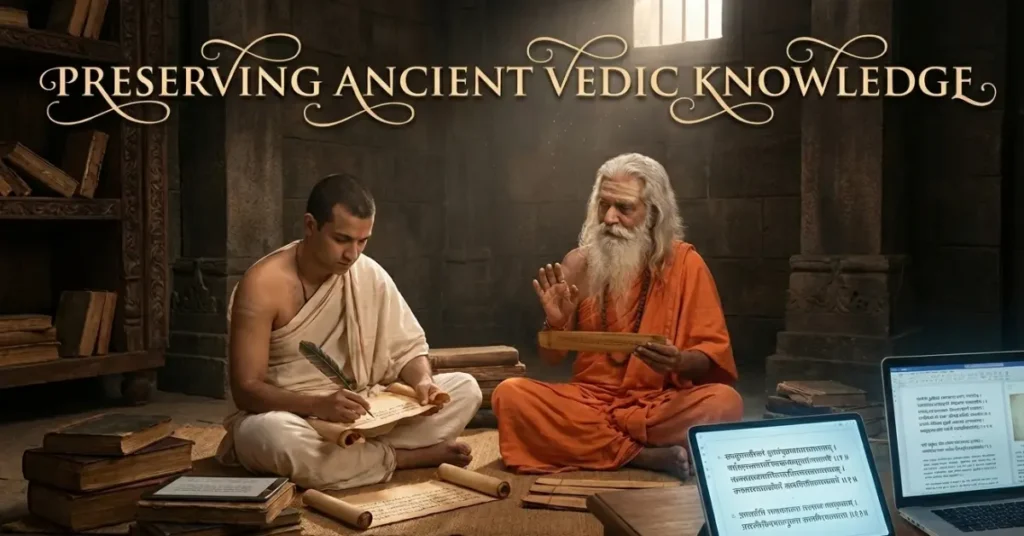
But I also worry. In our rush toward everything new and digital, we’re slowly losing touch with these roots. Family pandits are fewer, old handwritten kul-pustaks are gathering dust, and younger generations often know more about apps than about their own gotra or kuldevi.
That’s what keeps me awake some nights, and that’s exactly why this platform exists—not just to offer tools, but to quietly preserve what our ancestors gave us.
I didn’t build this to make money or chase trends. I built it because I’ve seen how quickly traditions fade. My grandfather could recite his entire pravara by heart; today, many of us struggle to remember even our gotra. Children grow up hearing “Mangal Dosha” as something scary instead of understanding it as guidance from wise elders.
Ekadashi dates get mixed up, puja samagri lists are incomplete, and sacred mantras are chanted without knowing their deeper meaning. This platform is my small attempt to stop that slide.
Every tool here is designed to keep the old knowledge alive in a way that fits modern life. When someone uses the Gotra Finder or Kuldevi Locator, they’re not just getting an answer—they’re reconnecting with their lineage, asking their parents or grandparents to confirm, and keeping family stories alive. When a young couple checks Kundli matching and then visits a Hanuman temple for remedies, they’re continuing a practice that has protected marriages for centuries.
The mantra counters and Gayatri trackers encourage daily sadhana—the same discipline our parents and grandparents followed. The stotra PDFs and vrat kathas make sure sacred texts stay in our homes, ready to read or share with children. Even simple things like the Puja Samagri lists or Havan checklists help younger people perform rituals correctly, without feeling lost.
I’ve made everything free because this knowledge was never meant to be sold. The rishis shared it openly for everyone’s welfare. Temples offer prasad without checking wallets. In that same spirit, no one should have to pay to know their Panchang, trace their vanshavali, or find an auspicious muhurat.
We keep everything authentic—no mixing of systems, no modern inventions passed off as ancient. Only what comes from trusted texts and living traditions. And we’ll keep updating gently—adding new tools only when they truly serve the old wisdom, never to chase popularity.
My quiet dream is that years from now, a child will open this site with their parent, learn their nakshatra, hear stories about their kuldevi, and feel proud of where they come from. That one small moment would mean the tradition lived on through us.
This isn’t just a website. It’s my heartfelt promise to safeguard what was freely given to us—so we can freely pass it to the next generation.
Future Vision & Upcoming Features
I often dream about where this platform could go. When I started, it was just a few tools to help my family and friends with daily Vedic needs. Now, seeing thousands use it every month, I feel a deeper calling—to make it a true home for Sanatan Dharma in the digital age. My vision is simple: a space where ancient wisdom meets tomorrow’s technology, helping more people live with purpose, peace, and connection to their roots. No fluff, no commercialization—just pure, evolving support for spiritual journeys.

By 2026 and beyond, I want this to be more than tools. Imagine a community where users share stories of how a muhurat changed their day or a mantra brought calm. We’ll keep everything free, accurate, and respectful, blending tradition with gentle innovations like AI-assisted explanations (but never replacing the classics). Updates will come from real feedback—yours—and always honor the rishis’ teachings.
Here’s a quick table of what’s coming soon. I’ve planned these based on what people ask most: more personalization, deeper insights, and easier sharing.
| Feature Name | Description | Expected Launch | Why It Matters |
|---|---|---|---|
| Personalized Vedic Dashboard | A custom home page showing your daily Panchang, transit alerts, and favorite tools based on your birth chart. | Q2 2026 | Makes guidance feel tailored, like a personal pandit in your pocket. |
| AI-Enhanced Remedy Suggester | Suggests simple remedies (mantras, charities) with explanations, using your Kundli without replacing human wisdom. | Q3 2026 | Helps beginners apply knowledge safely, with links to scriptures. |
| Community Story Sharing | Users share anonymous experiences (e.g., “How Ekadashi helped me”) with moderation for positivity. | Q4 2026 | Builds connection, showing real-life impact of traditions. |
| Mobile App Integration | Full app for Android/iOS with offline Panchang and push notifications for transits like Sade Sati peaks. | Q1 2027 | For on-the-go access, especially during festivals or travels. |
| Advanced Lineage Builder | Expand Family Tree Maker with photo uploads, pravara details, and exportable PDFs for family books. | Q2 2027 | Preserves heritage for future generations, making vanshavali fun. |
| Multilingual Support | Tools in Hindi, Tamil, Telugu, and more, with audio for mantras and stotras. | Q3 2027 | Reaches non-English speakers, honoring regional traditions. |
| Yearly Vedic Calendar | Interactive calendar with all festivals, vrats, and personal muhurats based on your location and chart. | Q4 2027 | One-stop planning for the year, reducing confusion during big events. |
Let me walk you through these step by step, like I’d explain to a close friend over tea.
Step 1: We start with the Personalized Dashboard because basics come first. You enter your details once, and it greets you with “Today’s auspicious color for your rashi” or “Jupiter transit alert—time for growth.” It’s like your morning chai, warm and ready.
Step 2: The Remedy Suggester builds on that, using safe AI to say, “For your Pitra Dosha, try this monthly tarpan ritual—here’s why from Parashara.” I’ll test it personally to ensure it stays true and simple.
Step 3: Community Sharing follows, creating a space for stories. Imagine reading “My Kaal Sarp remedy story” and feeling inspired. We’ll keep it positive, no debates—just heartfelt shares.
Step 4: The Mobile App makes everything portable. Offline mode means no internet needed for basic Panchang during village trips or power cuts.
Step 5: Lineage Builder deepens family ties. Add photos of ancestors, link pravaras—it’s like making a digital kul-pustak to pass down.
Step 6: Multilingual opens doors. My Tamil relatives always ask for local languages; this honors that diversity.
Step 7: The Yearly Calendar wraps it up, helping plan Diwali to Navratri with your personal touch.
These aren’t just features—they’re my way of ensuring Vedic knowledge thrives. We’ll roll them out slowly, testing with real users like you. Share your ideas; this grows together.
Why Trust Our Astrology & Spiritual Platform
I get this question a lot: “There are so many astrology sites—why should I trust yours?” It’s a fair doubt. The internet is full of flashy apps promising miracles, pushing paid readings, or giving vague predictions that could apply to anyone. I built this platform precisely because I was tired of that noise.

Trust, for me, starts with honesty and sincerity—no hidden motives.
First, there’s no money involved here. Nothing is behind a paywall. No ads popping up, no “premium” readings, no pressure to buy gems or book consultations. I don’t earn a single rupee from this. It’s pure seva—an offering to keep our traditions alive. When profit isn’t the goal, you can trust that the guidance comes from a clean place.
Second, accuracy isn’t a marketing word for us—it’s a promise. We use the Lahiri Ayanamsa, the same standard trusted by most pandits, temples, and government calendars. Planetary calculations follow classical methods, tested against real charts. Thousands have written back saying the Panchang timings, muhurats, and dasha periods matched exactly what their family astrologer said. That consistency is what builds quiet confidence.
Third, we never scare people. You won’t find dramatic warnings like “terrible dosha—urgent remedy needed!” Doshas are explained gently, with their real meaning and simple, affordable remedies from scriptures—mantra, charity, fasting, temple visits. Fear has no place in true Jyotish; only understanding and hope do.
Fourth, authenticity runs deep. Every remedy, every rule, every gotra list comes from traditional sources I’ve studied and cross-checked over years. We don’t mix systems or invent new methods. What you get is the same wisdom my grandparents followed—pure, unchanged, and respectful.
Fifth, real people are behind this. I read every feedback email myself. When someone points out a small error (and it happens—we’re human), we fix it quickly and quietly. When families share that our Griha Pravesh muhurat brought peace to their new home, or that the Sade Sati guidance helped them stay strong, those messages keep us going. This isn’t a faceless company; it’s one person and a small team doing this with heart.
Finally, we always guide you back to your roots. Every tool has a note: confirm gotra with elders, consult a pandit for big decisions, listen to your family’s traditions. We’re not here to replace anyone—we’re here to support and connect.
In a world full of quick fixes and paid predictions, this platform stands apart because it asks nothing from you and gives everything it can. It’s built on the same trust my grandmother placed in her old Panchang, the same faith families have shown in Vedic wisdom for generations.
You can trust it because it doesn’t want anything from you—only that you find clarity, peace, and a stronger connection to your heritage.
Start Your Spiritual Journey With Us
I’ve said everything I wanted to say—the why, the how, the tools, the promise. Now it’s your turn. You don’t need to make a big decision today. You don’t need to change your whole life or become someone different. Just take one small step. That’s how every real journey begins.

Open the website right now, while this page is still in front of you. Scroll to the tool that calls to you. Maybe it’s the Daily Panchang to see what today holds. Maybe the Gotra Finder because someone recently asked about your lineage. Maybe the Mantra Counter because you’ve been meaning to start chanting again. Or perhaps just the Chakra Timer for five quiet minutes of breathing.
Click it. Try it. See how it feels.That one small action might be the beginning of something beautiful. A little more peace in the morning. A little more confidence before an important day. A little more connection to your parents, grandparents, and the long line of ancestors who carried the same traditions.
I’ve watched it happen so many times. A busy father starts checking muhurats and suddenly feels his days flow better. A young woman discovers her kuldevi and visits the temple for the first time in years—tears come, but they’re the good kind. An elderly uncle uses the Ekadashi tool and says, “I finally feel I’m doing it right.”
These aren’t miracles. They’re just the quiet fruits of staying connected to something older and wiser than our daily worries.
This platform will always be here for you—free, simple, and honest. No rush, no pressure, no cost. Come back tomorrow, next week, or whenever life brings a question. We’ll be waiting with the same warmth.
Your journey doesn’t have to be perfect. It only has to begin. So take that one small step today. Open a tool. Read your Panchang. Chant one round. Look up your rashi. And let the light of our ancient wisdom guide you, gently, one day at a time. I’m walking this path too, right alongside you. Welcome home.
🌺 Namaste 🌺
Disclaimer:
This guide provides general information about Gotra traditions. For specific marriage decisions, always consult with family elders, community priests, and consider both traditional and modern perspectives.